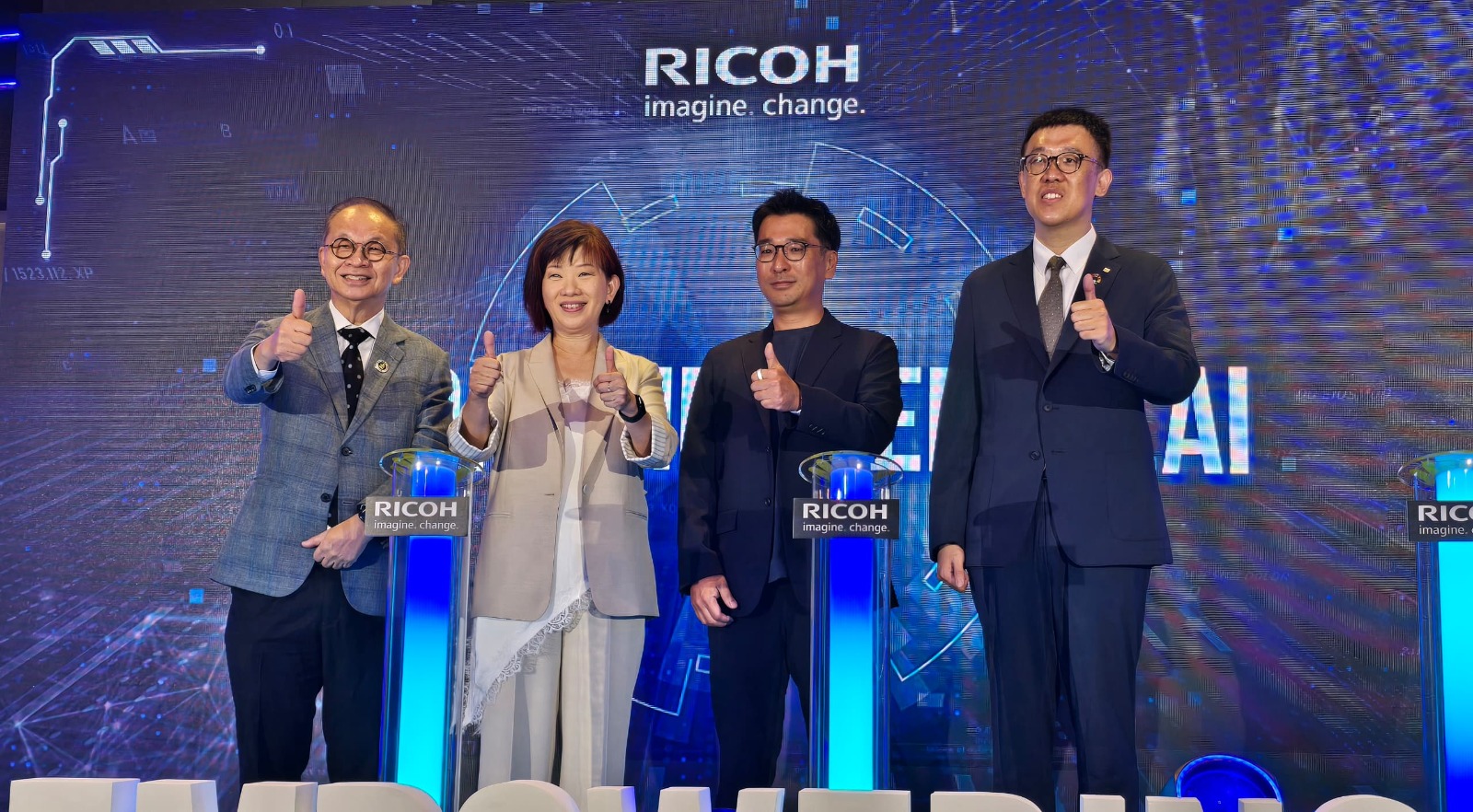
RICOH Malaysia has unveiled a comprehensive suite of artificial intelligence (AI), automation, and integrated technology solutions at its “RICOH Empowering AI – Smarter Work, Real Impact” event held at M World Hotel, Petaling Jaya. The showcase highlights a growing industry shift from AI experimentation to real-world implementation, where intelligent technologies are increasingly embedded into daily operations across sectors such as logistics, manufacturing, inspection, and workplace management.
The event aligns with Malaysia’s broader industrial transformation agenda under the New Industrial Master Plan 2030 (NIMP 2030), which aims to develop 3,000 smart factories through the adoption of automation, AI, and advanced digital technologies. Against this national backdrop, RICOH demonstrated how intelligent systems can enhance operational visibility, reduce manual processes, and improve efficiency across complex business environments.
The programme was officiated by RICOH’s Chief Digital Officer for the APAC region, Satoshi Tsugane, alongside Federation of Malaysian Manufacturers (FMM) President Jacob Lee Chor Kok and RICOH Malaysia Managing Director Alice Lee. Their presence underscored the increasing collaboration between technology providers, industry stakeholders, and policymakers in driving Malaysia’s digital and industrial modernisation efforts.
According to Satoshi Tsugane, organisations are increasingly seeking AI solutions that deliver measurable business value rather than remaining at the experimental stage. He emphasised the importance of connecting information, workflows, and people through intelligent technologies that can support long-term digital transformation and operational efficiency.
FMM President Jacob Lee Chor Kok echoed this view, noting that manufacturers are under growing pressure to improve productivity and competitiveness in an increasingly complex global environment. He highlighted that the real challenge lies not only in adopting technology, but in integrating it effectively to achieve tangible operational improvements. He also stressed the importance of cross-industry platforms in helping businesses better understand practical applications of AI and automation.
The showcase also featured demonstrations of AI-powered applications across key operational areas. These include intelligent inspection systems designed to enhance precision and consistency in quality control processes, AI-driven workflow solutions that improve information accessibility and coordination, and connected automation systems that enable more adaptive and responsive operations across industries.
RICOH Malaysia Managing Director Alice Lee further explained that the focus is shifting from AI potential to AI implementation. She noted that RICOH’s goal is to help organisations operationalise intelligent technologies in scalable and practical ways, enabling businesses to improve agility, responsiveness, and long-term competitiveness across diverse operational environments.
As Malaysia continues its push toward digitalisation and industrial automation, RICOH’s latest showcase reflects a broader transformation in how businesses approach technology adoption. The emphasis is no longer solely on innovation, but on creating real-world impact through connected, intelligent, and adaptable operational systems that support sustainable growth in an increasingly digital economy.