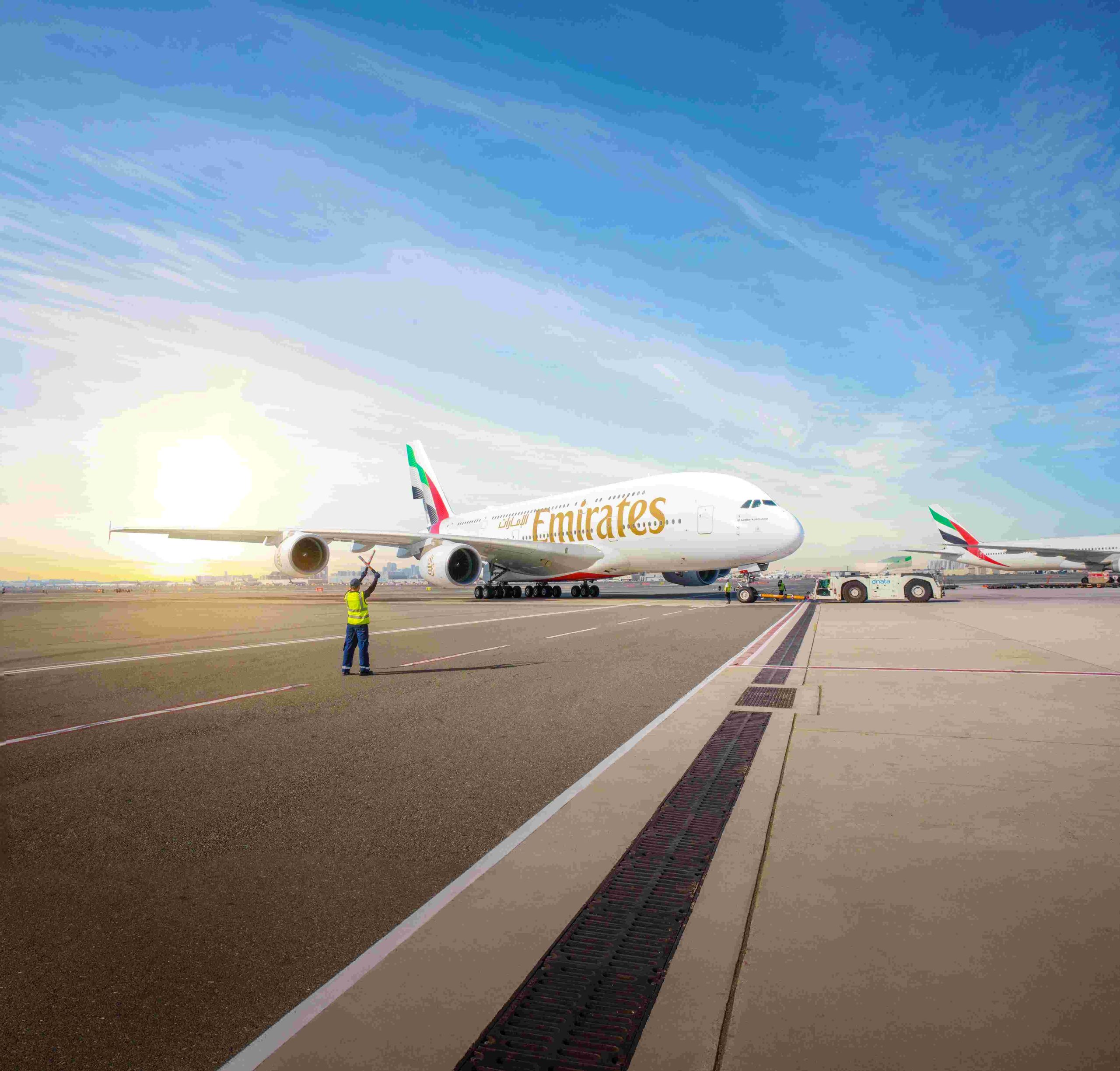
The Emirates Group today released its 2025-26 Annual Report, reporting record levels of profit, revenue and cash reserves despite facing significant operational disruptions during the final month of its financial year. Emirates was also recognised as the world’s most profitable airline during the 2025-26 reporting period.
For the financial year ended 31 March 2026, the Emirates Group recorded a profit before tax of AED24.4 billion (US$6.6 billion), representing a 7% increase from the previous year, with a profit before tax margin of 16.2%. Group revenue reached a record AED150.5 billion (US$41 billion), up 3% year-on-year, while cash assets climbed 12% to AED59.6 billion (US$16.2 billion). EBITDA stood at AED41.1 billion (US$11.2 billion), reflecting strong operating profitability across the business.
Emirates retained its position as the world’s most profitable airline, reporting a record profit before tax of AED22.8 billion (US$6.2 billion), an increase of 7% from the previous year, alongside a profit before tax margin of 17.4%. Revenue rose 2% to AED130.9 billion (US$35.7 billion), while cash assets reached an all-time high of AED54.9 billion (US$15 billion), up 10% compared with March 2025.
dnata also delivered strong growth across its operations, posting a record profit before tax of AED1.6 billion (US$437 million), up 2% year-on-year, with a profit margin of 6.8%. Revenue increased 12% to AED23.6 billion (US$6.4 billion), while cash assets rose 28% to AED4.7 billion (US$1.3 billion). The Group also declared a dividend of AED3.5 billion (US$1 billion) to its owner, the Investment Corporation of Dubai (ICD).
Following the UAE’s adoption of Pillar Two tax rules, the Emirates Group’s corporate tax rate increased from 9% to 15% during the financial year. After accounting for taxation, the Group recorded a net profit of AED21 billion (US$5.7 billion), representing a 3% increase over the previous financial year.
Chairman and Chief Executive of Emirates Airline and Group, His Highness Sheikh Ahmed bin Saeed Al Maktoum, said the results demonstrated the resilience and strength of the Emirates Group’s business model despite challenges experienced in the final month of the reporting period. He noted that strong demand for products and services had driven revenue growth during most of the financial year, supported by sustained investments in products, technology, people and brand development.
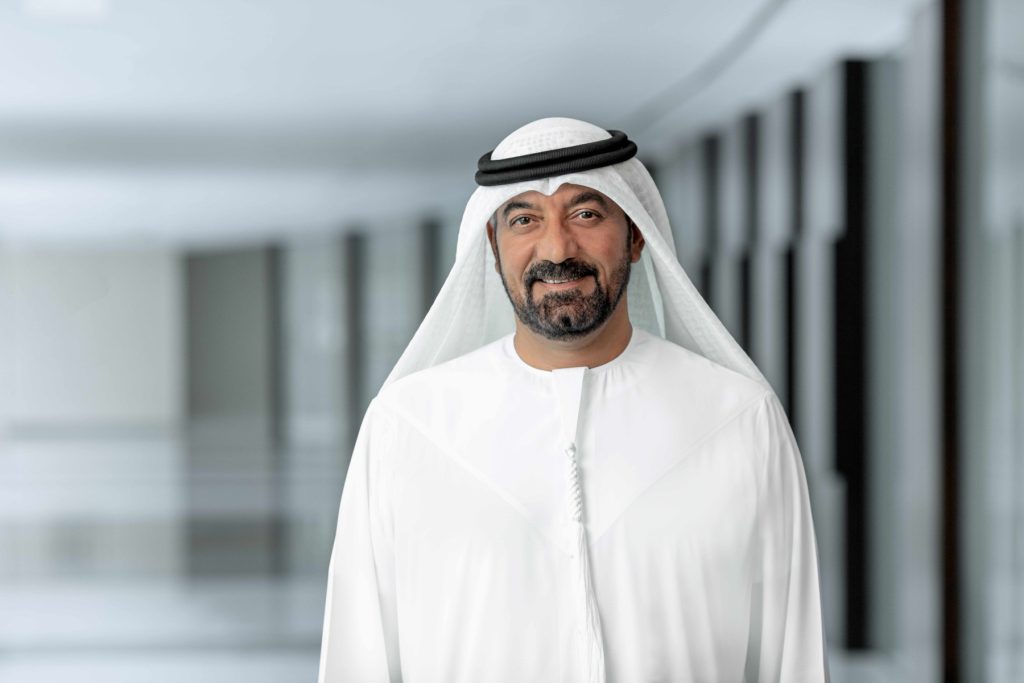
He explained that military activity in the Gulf region at the end of February significantly disrupted commercial air traffic, including operations in the UAE. Emirates and dnata responded quickly to support customers and employees, safeguard assets and maintain operational continuity. Sheikh Ahmed added that Dubai’s long-term investment in aviation infrastructure enabled authorities to secure safe corridors for commercial flights, allowing Emirates and dnata to gradually restore operations at Dubai International Airport (DXB). Although passenger capacity remains below pre-disruption levels, cargo operations have expanded to support the transportation of essential goods into and through the UAE.
Sheikh Ahmed said the Emirates Group has successfully navigated previous crises by focusing on customers and employees, adding that the Group’s workforce played a key role in responding effectively during a challenging operating environment. He also expressed appreciation to the UAE leadership and ecosystem partners for their continued support of Dubai’s aviation sector.
During the financial year, the Emirates Group invested AED17.9 billion (US$4.9 billion) in aircraft, facilities, equipment and technology to support long-term growth. The Group’s workforce increased by 8% to 130,919 employees, while the number of UAE nationals employed by the Group surpassed 4,000.
Looking ahead to 2026-27, Sheikh Ahmed said the Group remains optimistic despite geopolitical uncertainty in the region. He noted that Emirates has secured fuel hedging arrangements until 2028-29 and worked closely with suppliers to support operational requirements. He added that strong cash reserves would enable the Group to continue investing in aircraft deliveries, retrofit programmes and infrastructure projects without implementing aggressive cost-cutting measures.
Emirates expanded its passenger and cargo capacity by 1% to 60.6 billion ATKMs during 2025-26. The airline launched new services to Da Nang, Hangzhou, Siem Reap and Shenzhen, while increasing frequencies on existing routes to meet rising customer demand. By the end of March, Emirates operated services to 152 cities in 80 countries and strengthened its connectivity through 32 codeshare and 117 interline partnerships, giving customers access to more than 1,700 cities globally.
The airline added 15 Airbus A350 aircraft to its fleet during the year, enabling more customers to experience its Premium Economy cabin and upgraded inflight entertainment systems. Emirates ended the financial year with a fleet of 277 aircraft, with an average fleet age of 10.8 years. At the 2025 Dubai Airshow, the airline announced additional fleet investments worth US$41.4 billion, including orders for 65 Boeing 777-9 aircraft and eight A350-900 aircraft. Emirates’ order book now stands at 367 aircraft scheduled for delivery through 2038.
Strong demand across global markets contributed to Emirates recording revenue of AED130.9 billion (US$35.7 billion), while operating cash flow reached AED32 billion (US$8.7 billion). Fuel and employee expenses remained the airline’s largest cost components, although lower average fuel prices helped reduce the overall fuel bill compared with the previous year. Emirates achieved a record net profit of AED19.7 billion (US$5.4 billion), delivering a net profit margin of 15%, the strongest financial performance in the airline’s history.
The airline carried 53.2 million passengers during the year, while maintaining a passenger seat factor of 78.4%. Emirates also continued investing in customer experience improvements, including the rollout of Starlink high-speed Wi-Fi across its fleet and the expansion of its US$5 billion aircraft retrofit programme. By the end of March, 91 aircraft had completed cabin upgrades featuring Emirates’ latest inflight products, including Premium Economy seating.
On the ground, Emirates introduced several customer-focused initiatives, including a dedicated First Class check-in lounge at Dubai International Airport Terminal 3 and expanded chauffeur-drive services for premium passengers in Japan. The airline also launched an Accessible and Inclusive Travel Hub on its website to assist travellers with accessibility requirements and introduced sensory support products for passengers with autism.
Emirates SkyCargo delivered strong results during the financial year, transporting 2.4 million tonnes of cargo worldwide, an increase of 3% over the previous year. Revenue reached AED16.2 billion (US$4.4 billion), accounting for 12% of Emirates’ total revenue. The division expanded its freighter network and launched Emirates Courier Express, a new cross-border delivery solution, alongside specialised logistics services for the aerospace and engineering sectors.
Under the Emirates Group portfolio, Emirates Flight Catering and MMI/Emirates Leisure Retail also contributed positively to overall performance. Emirates Flight Catering increased external customer revenue by 12% to AED1.2 billion (US$329 million), while MMI/Emirates Leisure Retail recorded revenue of AED2.9 billion (US$803 million).
dnata continued to expand globally, with total revenue increasing 12% to AED23.6 billion (US$6.4 billion). International markets accounted for 77% of dnata’s revenue, driven by growth in Australia, Europe, the UAE, the United Kingdom and the United States. dnata invested AED858 million (US$234 million) during the year in facilities, cargo operations and sustainable airport equipment, while also acquiring logistics and travel-related businesses to strengthen its capabilities.
The Group also continued advancing its sustainability agenda through investments in sustainable aviation fuel research, waste reduction initiatives and environmentally friendly ground equipment. Community engagement programmes remained a key focus, with the Emirates Airline Foundation supporting disadvantaged children through education, healthcare and humanitarian initiatives, while dnata and MMI employees participated in various charity and food donation programmes globally.
The full Emirates Group 2025-26 Annual Report, covering Emirates, dnata and associated subsidiaries, is available on the Group’s official website.