Sudden cardiac arrest remains one of the leading causes of death in Malaysia, often striking without warning and requiring immediate medical intervention. Despite advances in emergency care, survival rates in the country remain between 0.5% and 8.5%, largely due to limited access to Automated External Defibrillators (AEDs) and delays in initiating Cardiopulmonary Resuscitation (CPR). Medical experts note that a victim’s chance of survival decreases significantly with every passing minute, particularly after eight to ten minutes without intervention.
Recognising the urgent need to improve emergency preparedness, Sunway Medical Centre Velocity (SMCV) has launched a new Corporate Social Responsibility (CSR) initiative aimed at increasing public access to AEDs while building greater confidence in their use. The programme builds upon the hospital’s earlier “Save A Number, Save A Life” campaign, reinforcing the importance of immediate action during cardiac emergencies and strengthening the role of SMCV’s Accident & Emergency (A&E) Department as a multi-specialty tertiary emergency care provider.

According to SMCV Medical Director and Consultant Emergency Physician, Dr. Wee Tong Ming, sudden cardiac arrest can happen anytime and anywhere. He explained that many lives are lost not because help is unavailable, but because emergency responses are delayed and life-saving equipment is not easily accessible. In such situations, every second can make the difference between life and death.
Studies indicate that the majority of cardiac arrests occur outside hospital settings, with approximately 10% taking place in public spaces and commercial buildings. Although many bystanders are willing to assist, hesitation often stems from a lack of knowledge and confidence rather than a lack of willingness. This highlights the importance of not only increasing AED availability but also educating the public on how to respond effectively during emergencies.
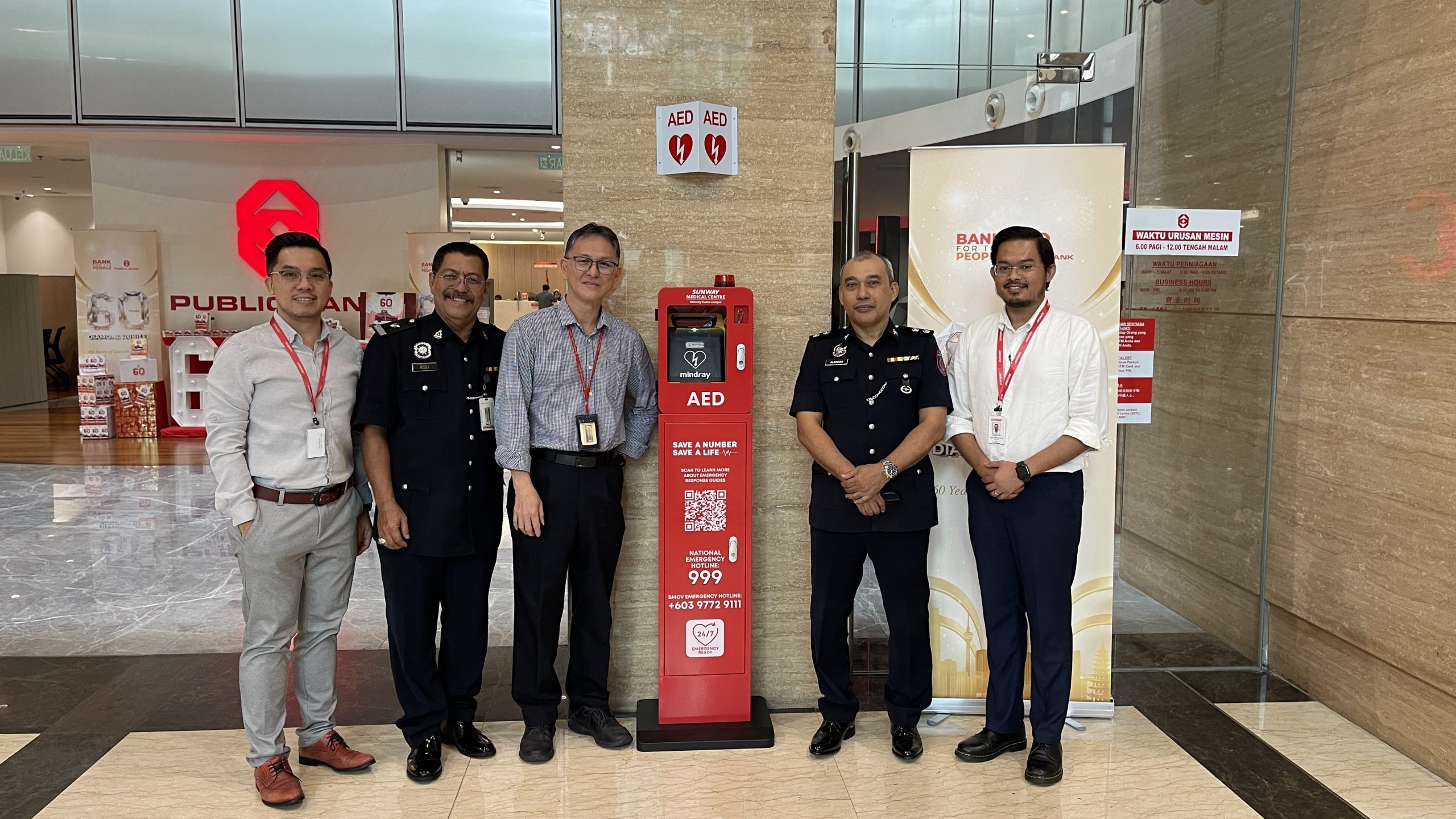
As part of the initiative, SMCV has installed multiple AED units at strategic high-traffic locations across Kuala Lumpur. These include MRT stations such as Tun Razak Exchange (TRX), Bukit Bintang, Ampang Park and Muzium Negara, as well as Aquaria KLCC, Menara Public Bank and Menara Public Bank 2. These locations were carefully selected to ensure that life-saving equipment is readily available in busy public areas where emergency situations are more likely to occur.
The initiative will soon be expanded with additional AED installations at the National Heritage Building of Stadium Merdeka within the Merdeka 118 Precinct, Public Bank IT & Training Centre (ITTC), and Bangunan Public Bank on Jalan Sultan Sulaiman. Every AED unit will be accompanied by highly visible informational standees to help members of the public quickly identify and confidently use the devices during emergencies.
To further enhance public awareness, QR code stickers linking to SMCV’s “Save A Number, Save A Life” campaign webpage have been placed on the AED standees as well as selected General Practitioner (GP) clinics. These digital resources provide quick access to essential guidance on handling medical emergencies before professional medical assistance arrives.

SMCV Chief Executive Officer Susan Cheow said no one should feel helpless during a medical emergency simply because they lack the knowledge or access to the appropriate equipment. She emphasised that the hospital remains committed to closing the gap in emergency response by making life-saving tools more accessible while empowering communities with the confidence to act quickly when every second counts.
Beyond installing AEDs, SMCV has also organised on-site AED training sessions and Accident & Emergency awareness talks at selected locations. These programmes provide participants with practical knowledge on recognising the signs of cardiac arrest, performing basic CPR, and using AEDs correctly and safely through hands-on demonstrations conducted by trained professionals.
Dr. Wee added that installing AEDs is only one part of improving emergency response capabilities. Equally important is ensuring that people possess the knowledge, skills and confidence to use the devices effectively when faced with a real-life emergency. Timely and appropriate intervention, he said, can significantly improve survival outcomes for cardiac arrest victims.
Susan Cheow also stressed that medical emergencies are not only a test of healthcare systems but also of how prepared public spaces are to support people during critical moments. By expanding AED availability across public and corporate locations, SMCV hopes to inspire more organisations to integrate emergency preparedness into their everyday safety planning and create safer communities for everyone.
Through this latest initiative, Sunway Medical Centre Velocity continues to demonstrate its commitment to proactive healthcare and community empowerment. By combining wider AED accessibility with public education and practical training, the hospital aims to equip Malaysians with the knowledge and confidence needed to respond effectively during cardiac emergencies, ultimately helping to save more lives across the country.