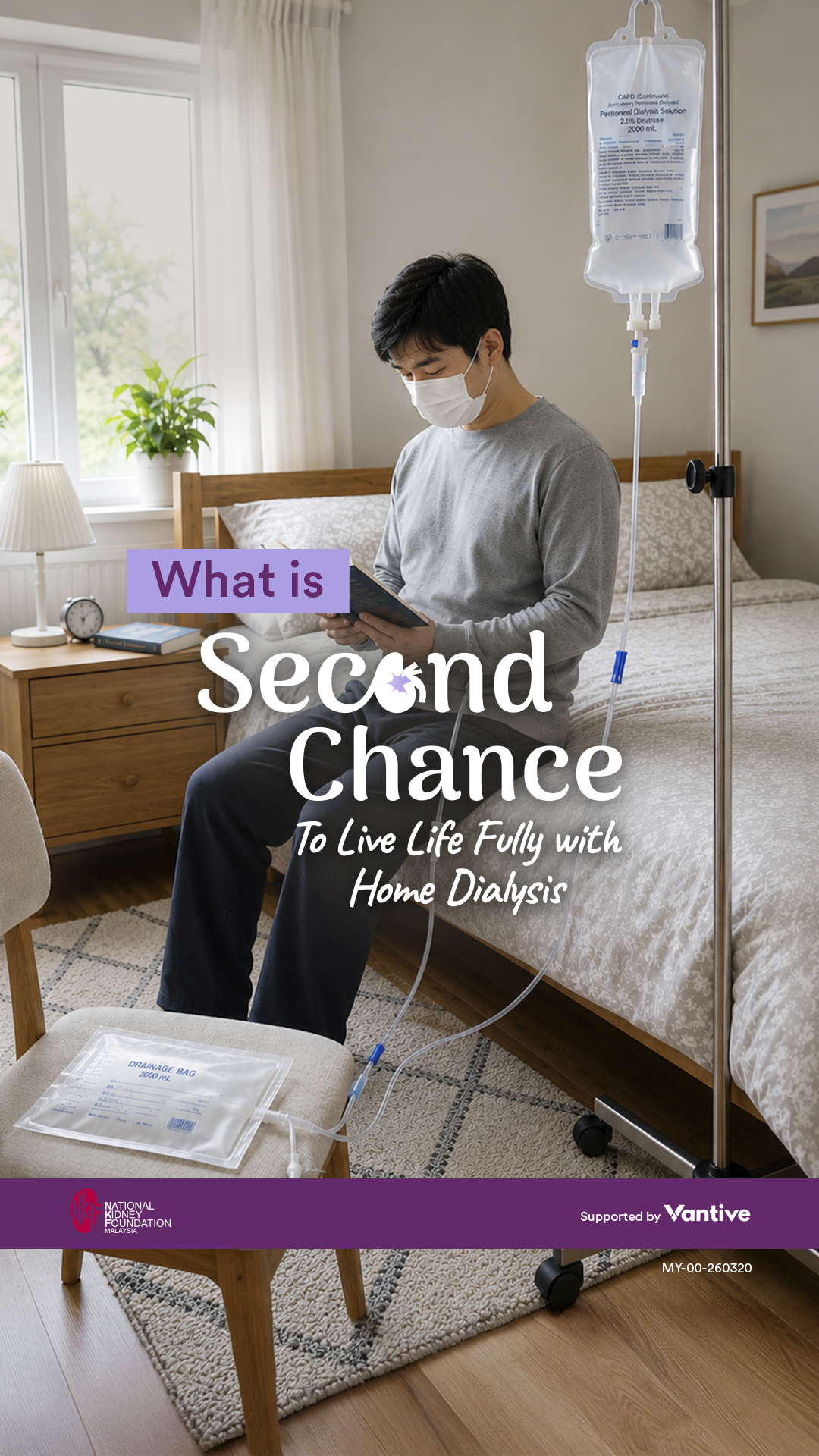
For many Malaysians newly diagnosed with end-stage kidney disease (ESKD), navigating what comes next can feel overwhelming. While in-centre haemodialysis remains the most widely recognized and accessible form of treatment, many patients remain unaware of other viable therapies, including home-based options such as peritoneal dialysis (PD). Addressing this awareness gap is crucial, as the choice of treatment does more than shape clinical outcomes it directly determines how much personal flexibility, independence, and daily time patients are able to preserve.
To bridge this information divide, the National Kidney Foundation of Malaysia (NKF), in partnership with vital organ therapy company Vantive, has launched Second Chance. Backed by Vantive’s 70-year legacy of innovation in kidney care, this community-driven public education initiative is designed to bring real-life patient journeys to the forefront while providing accessible, credible insights on home dialysis solutions for patients and caregivers nationwide.
Conventional haemodialysis typically requires patients to commit to three four-hour sessions per week at a medical facility, alongside substantial commuting time and logistical expenses that often dictate their daily routines. In contrast, Automated Peritoneal Dialysis (APD) utilizes a specialized machine to administer treatment overnight in the comfort of a patient’s home while they sleep. By eliminating frequent hospital commutes and preserving daylight hours, eligible patients can maintain their careers and routines with minimal disruption to their lifestyles.
NKF Chief Executive Officer, Mr. Choo Kok Ming, emphasized that a kidney disease diagnosis should not define how an individual lives. Through Second Chance, real experiences demonstrate that informed decisions can restore autonomy and dignity. A prime example is Timothy Wilfred Jepos from Sarawak, who successfully balances professional responsibilities and family life because APD allows him to undergo treatment overnight, freeing his days for the moments that matter most.
Beyond treatment modalities, the initiative highlights existing yet underutilized support networks, such as PERKESO’s Disability Management Programme, which provides eligible individuals with vocational and financial assistance. Furthermore, logistical hurdles have been addressed with direct home delivery of APD supplies for patients across Sabah and Sarawak. Ultimately, Second Chance reinforces a vital message: with modern home dialysis, established government-backed support, and an informed community, a diagnosis does not mean putting life on hold it offers a pathway to live fully once again.