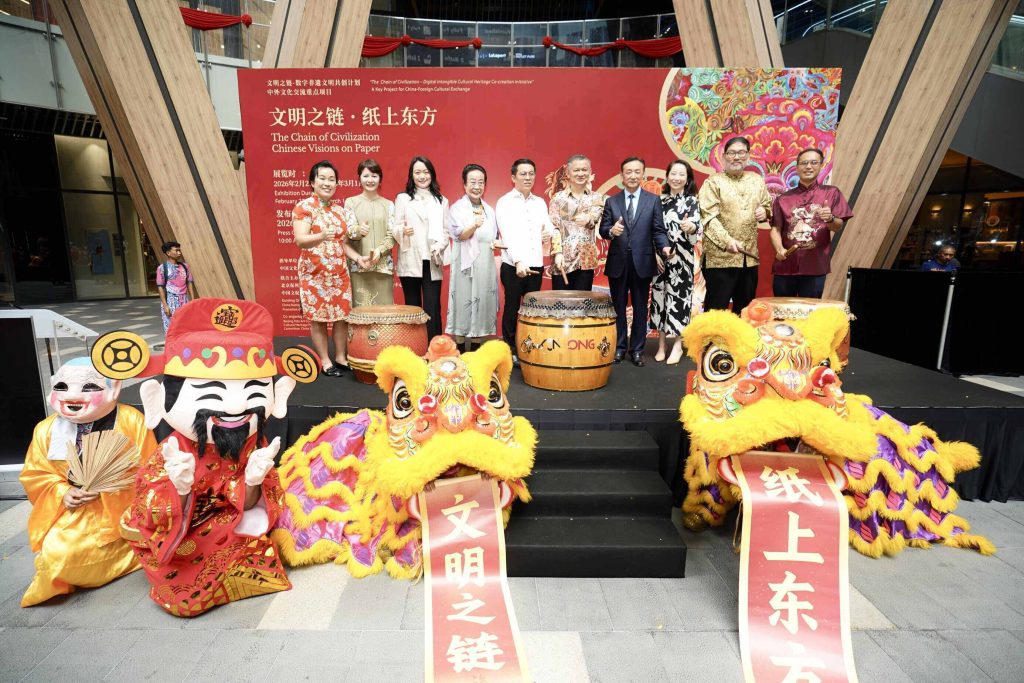
KUALA LUMPUR, 27 February 2026 – Malaysia has proudly become the first overseas host for the “Chain of Civilization – Digital Intangible Cultural Heritage (ICH) Co-Creation Initiative,” marking a significant milestone in global cultural exchange. The exhibition officially opened today at LaLaport Bukit Bintang City Centre and will remain open to the public until 1 March 2026. This marks the initiative’s first international expansion outside of China, providing a unique platform that fuses traditional heritage with cutting-edge digital technology.
The “Chain of Civilization” initiative is one of the key international cultural exchange programs for 2025. Anchored on the concept of a “chain,” it symbolizes the interconnectedness and shared development of civilizations. Designed as an annual, thematic project rolled out across different countries, the initiative seeks to create a contemporary “cultural gateway” that presents Chinese intangible cultural heritage through innovative, immersive, and interactive methods. By bridging tradition with technology, it fosters mutual learning between cultures and establishes a new benchmark for international cultural exchange.
Titled “Chinese Visions on Paper,” the Kuala Lumpur exhibition centers on Yuxian paper-cutting, a recognized National Intangible Cultural Heritage of China. By incorporating immersive digital design and spatial innovation, the showcase reinterprets traditional craftsmanship in a contemporary context. Visitors are invited to explore how heritage arts can evolve without losing their cultural essence, while also promoting fresh collaboration between Malaysian and Chinese artists.
Over 40 original works are on display, including Zhou Shuying’s acclaimed series “Twelve Zodiac” and “Flora & Fauna of Fortune.” Zhou, a third-generation inheritor of Yuxian paper-cutting, was trained by her father from a young age and has mastered the foundational techniques of sketching, carving, and coloring. She continues to innovate by transforming traditional decorative art into thematic and public installations, demonstrating the dynamic potential of intangible heritage in contemporary society. Complementing this, contemporary artist Cui Xiaoqing presents the “Thousand-Pattern Project,” which reimagines Chinese character structures and traditional patterns, providing a modern design lens on folk artistry.
The exhibition goes beyond static displays, offering immersive and interactive experiences that appeal to all ages. The “Cube” digital space creates a multi-sensory environment where light projections and motion visuals bring paper-cut designs to life. At the Master Workstation, visitors can observe live demonstrations of sketching, cutting, and coloring techniques, offering an intimate glimpse into the craft. Additionally, the AI Interactive Greeting Card zone allows participants to create personalized digital artworks inspired by traditional motifs, seamlessly blending heritage with technology.
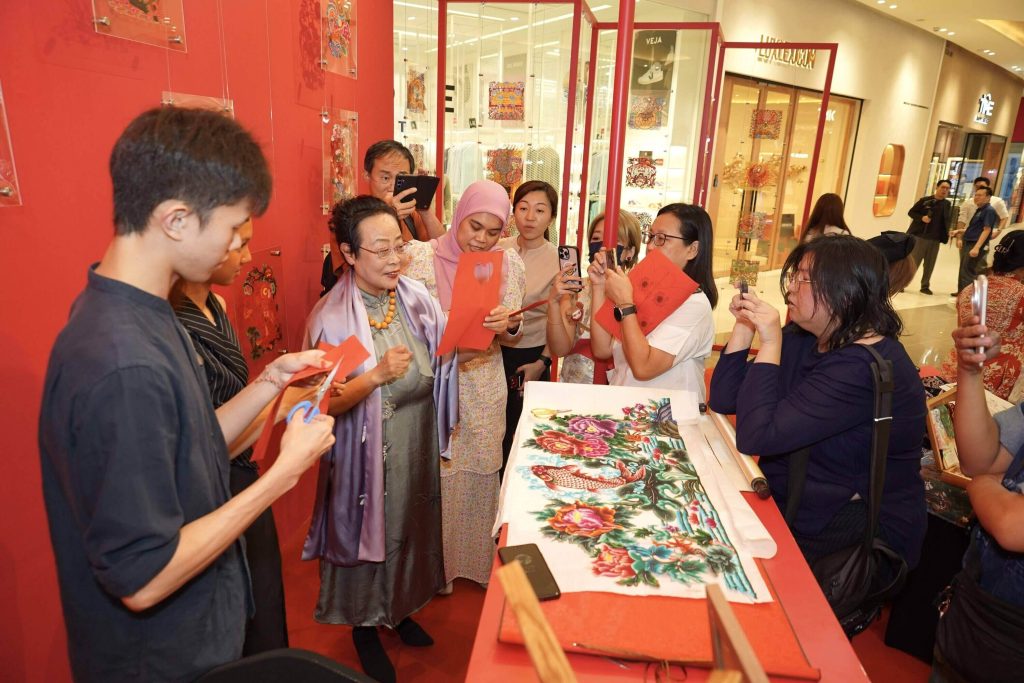
Highlighting cross-cultural exchange, the opening day featured a joint session between National Intangible Cultural Heritage inheritor Zhou Shuying and a Malaysian batik master. The discussion emphasized the similarities and shared aesthetics between paper-cutting and batik, including motifs, color palettes, and handcraft techniques, underscoring the universal language of traditional artistry.
“This initiative is more than an exhibition; it is a bridge connecting Malaysia and China through intangible heritage,” said Zheng Xuefang. “Digital technology serves as a powerful wing for transmitting intangible heritage, allowing Malaysian traditional culture to reach China while China’s heritage treasures connect with Malaysian youth. We hope this dialogue will inspire new collaborations and mutual appreciation.”
Mr. Zhu Xiaojian emphasized that the vitality of intangible heritage lies not only in preservation but also in effective dissemination. “Through digital visuals, online engagement, and immersive experiences, heritage arts become more accessible and relevant to global audiences,” he said.
Tourism officials also highlighted the broader significance of the initiative. “Intangible cultural heritage strengthens bilateral cultural relations and presents tremendous opportunities within cultural tourism,” said Mr. Lee Thai Hung. “Programs like this allow visitors to deeply appreciate another culture while enhancing Malaysia’s profile as a dynamic destination for cultural tourism.”
The Kuala Lumpur exhibition was guided by the China National Society for the Promotion of Arts and Culture and co-organized by Beijing Poly Art Co., Ltd. and the Cultural Heritage Protection and Utilisation Committee of the China Arts Development Association, with support from the China Internet Information Center. The event’s multi-faceted approach to showcasing intangible heritage exemplifies how technology, artistry, and cultural diplomacy can converge to engage global audiences in meaningful and transformative ways.
Exhibition Details:
Features: Over 40 original works, immersive “Cube” digital space, Master Workstation live demonstrations, AI Interactive Greeting Card zone, cultural exchange sessions
Dates: 27 February – 1 March 2026
Venue: LaLaport Bukit Bintang City Centre